
Why Most MSP Marketing Still Doesn’t Work in 2026 (and What High-Growth MSPs Are Doing Differently)
Read Time 3 mins | Written by: Gradient MSP
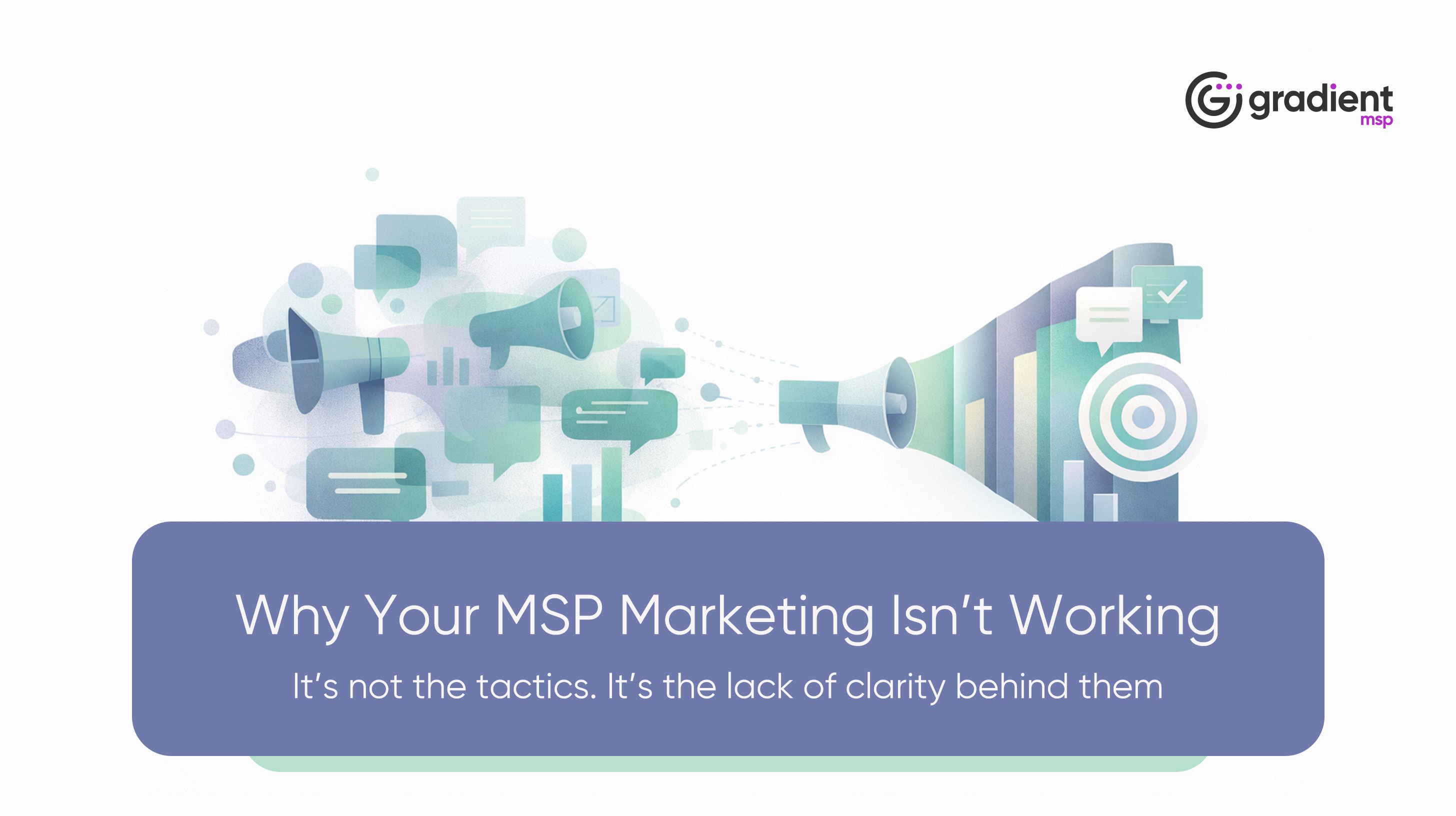
Most MSPs are “doing marketing.”
They post occasionally. They run some ads. Maybe they send a newsletter or publish blog content. On the surface, it looks like effort is being made.
But the results rarely match the activity.
Leads are inconsistent. Website traffic doesn’t convert. Campaigns feel disconnected. And over time, marketing becomes something that’s questioned instead of trusted.
The issue isn’t effort. It’s structure.
The Problem with Checkbox Marketing
A lot of MSP marketing follows a checklist:
- Have a website
- Run Google Ads
- Post on LinkedIn
- Send emails
- Publish blogs
Individually, these are all valid tactics. But without a clear strategy behind them, they don’t compound. They just exist.
This leads to a common frustration:
“We’re doing everything, but nothing is really working.”
That’s because marketing isn’t a collection of activities. It’s a system.
Visibility Is Harder Than Ever
In 2026, the challenge isn’t access to channels. It’s standing out within them.
Buyers are exposed to constant noise. AI-generated content has flooded every platform. Generic messaging blends in instantly.
If your positioning isn’t clear, your marketing becomes invisible.
And most MSP messaging still sounds the same:
- “Reliable IT support”
- “Fast response times”
- “24/7 monitoring”
These are expected. Not differentiators.
High-Growth MSPs Think Differently
The MSPs that are generating consistent demand aren’t necessarily spending more. They’re operating differently.
They’ve shifted from activity-based marketing to clarity-driven marketing.
Here’s what that looks like:
1. Clear Positioning Over Broad Services
Instead of trying to appeal to everyone, they define who they’re best for.
Industry focus. Business size. Specific pain points.
This allows them to speak directly to real problems instead of generic IT needs.
2. Messaging That Reflects Business Outcomes
They don’t lead with tools or services.
They lead with impact:
- Reduced downtime
- Improved operational efficiency
- Stronger security posture
- Predictable IT costs
The conversation shifts from “what we do” to “what this changes for you.”
3. Websites Built to Convert, Not Just Inform
Most MSP websites are digital brochures.
High-performing ones act as conversion engines.
They guide the visitor, build trust quickly, and make the next step obvious.
Structure, clarity, and design all play a role here.
4. Design as a Trust Signal
Before a prospect speaks to you, they judge your credibility visually.
Outdated or generic design creates hesitation.
Clean, modern, well-structured design communicates professionalism and confidence instantly.
5. Content That Builds Authority, Not Just Activity
Publishing content isn’t the goal. Being remembered is.
High-growth MSPs focus on insights, perspectives, and real expertise.
They create content that helps buyers think differently, not just consume information.
Demand Comes from Clarity
The biggest shift happening right now is this:
Demand is no longer created by being everywhere. It’s created by being clear.
Clear on who you serve.
Clear on what you solve.
Clear on why you’re different.
When that clarity exists, everything else becomes more effective:
- Ads convert better
- Content resonates more
- Sales conversations start stronger
Without it, even the best tactics underperform.
Where to Start
You don’t need to rebuild everything overnight. But you do need to step back and evaluate your foundation.
Start by asking:
- Can a prospect instantly understand who we’re for?
- Does our messaging focus on outcomes or services?
- Does our website guide action or just present information?
- Are we saying anything different from competitors?
If the answers aren’t clear, that’s where the opportunity is.
Marketing That Actually Works
Effective MSP marketing isn’t about doing more.
It’s about aligning what you say, how you present it, and who you’re trying to reach.
The MSPs that grow consistently are the ones that build systems, not just campaigns.
Because when marketing works, it doesn’t feel random.
It feels predictable.