
The MSP Content Trap: Why Publishing More Does Not Always Mean Growing More
Read Time 3 mins | Written by: Gradient MSP
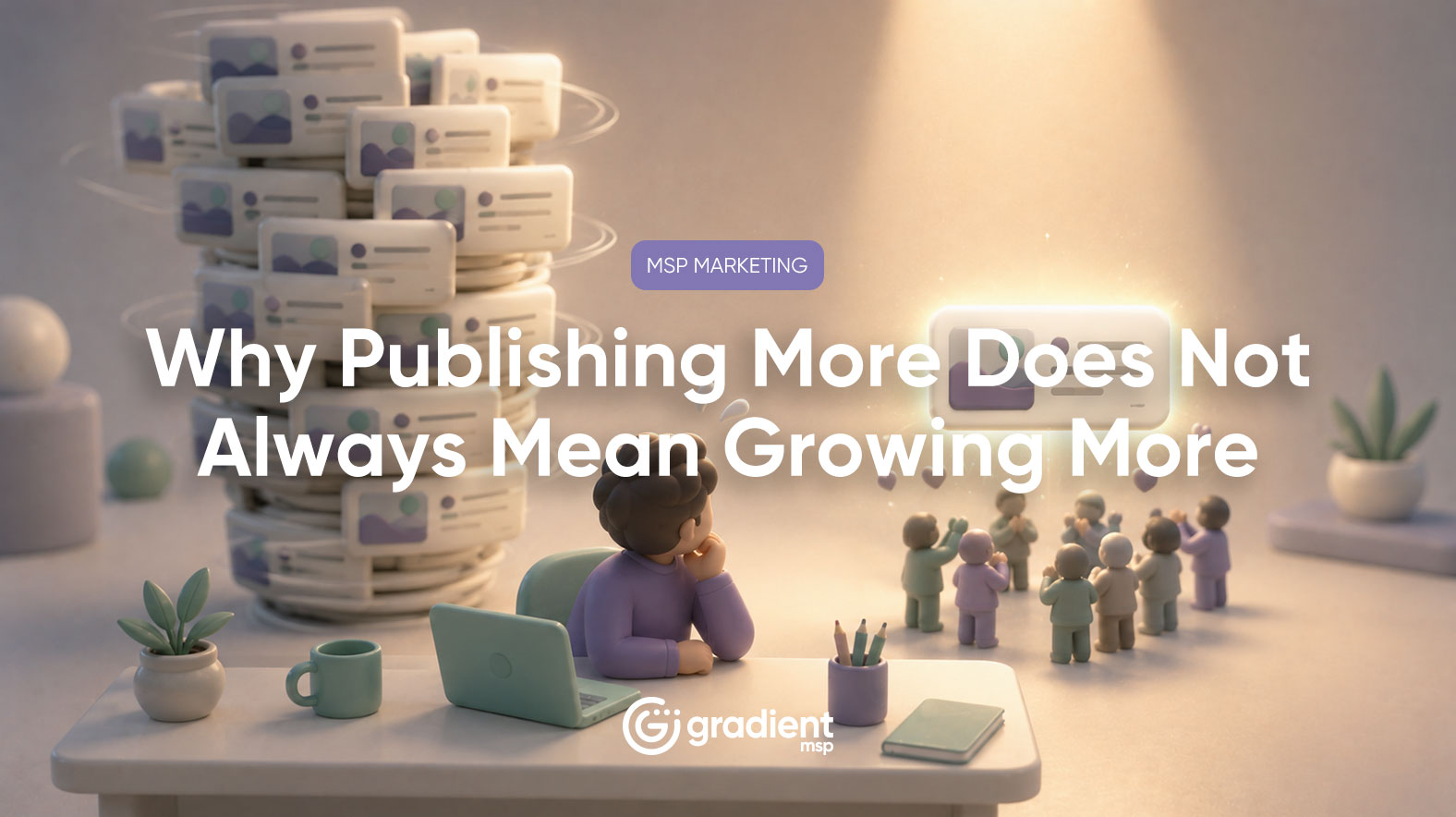
There is a version of the MSP content hamster wheel that most owners recognize. The pressure to post more. The schedule that fills up with content that maintains a presence without building one. The metrics that show activity without showing impact.
The trap is not doing too little. It is doing too much of the wrong thing.
Volume without specificity is the most common reason MSP content marketing produces activity but not pipeline. An MSP who publishes five generic posts per week is not five times more likely to generate an inbound conversation than an MSP who publishes one specific, deeply relevant post per week. They are probably less likely, because the signal-to-noise ratio in their content is low enough that even their best work gets lost in the volume.
What Makes Content Specific Enough to Work?
Specificity operates at two levels: audience and problem.
Audience specificity means the content is clearly written for a particular type of person in a particular context, not for anyone who might be interested in managed services. When a reader encounters content that names their industry, their specific operational challenge, or their exact situation, the resonance is immediate. Content written for everyone lands with no one. Content written for a dental practice manager dealing with HIPAA renewal has a chance of stopping that person mid-scroll.
Problem specificity means the content addresses a real, current, felt problem rather than a theoretical risk or a general best practice. "Here is why healthcare MSPs consistently underestimate the cost of their first breach" is more specific than "cybersecurity is important for healthcare." The first names a real situation. The second states a fact nobody disputes and nobody acts on.
The combination of audience specificity and problem specificity is what creates the experience of being understood. And being understood is what causes a reader to follow, save, share, and eventually reach out.
Why Do MSPs Default to Generic Content?
Because generic content is easier and feels safer. Writing a post about cybersecurity awareness does not require the author to take a position, name a specific audience, or say anything that could be wrong. It cannot fail. It also cannot succeed in the way that specific content can.
The other reason is that generic content performs reasonably well by the metrics most MSPs track. An industry trend post gets likes from vendors and peers. The engagement numbers look respectable. But peer engagement is not client engagement, and likes from people who already know you are not the signal you are optimizing for.
The MSPs generating actual pipeline from content have stopped optimizing for the metrics that are easy to see and started optimizing for the metric that matters: inbound conversations from ideal clients who say they have been following the content.
What Does the Right Volume Look Like?
Less than most MSPs think, if the alternative is maintaining volume at the cost of specificity. Three specific, audience-targeted posts per week outperform seven generic ones. The compounding effect of consistent, specific content over time is what builds a reputation that precedes the MSP in the market. That reputation does not come from volume. It comes from being the voice that consistently says the right thing to the right people.
The hardest part for most MSPs is not knowing what to say. It is saying it consistently, week after week, without it becoming the task that always gets pushed to tomorrow. That is the problem MSP Studio+ was built to solve. If you want to see what your brand looks like in the new graphics engine before committing, the free trial experience at getplus.meetgradient.com generates six fully branded posts from your logo and colors — no subscription required. A useful way to see whether the output meets the standard before the strategy conversation even starts.
FAQ
Why does publishing more content not always lead to more MSP growth?
Because volume without specificity produces low signal-to-noise content that maintains a presence without building one. An MSP who publishes five generic posts per week is not more likely to generate inbound pipeline than one who publishes one deeply specific, audience-targeted post. The quality and relevance of the content matters more than the frequency.
What makes MSP content specific enough to generate pipeline?
Two levels of specificity: audience specificity, writing clearly for a particular type of client in a particular context, and problem specificity, addressing a real and felt problem rather than a general best practice. The combination creates the experience of being understood, which is what drives follows, saves, and inbound conversations.
What is the right publishing volume for MSP content marketing?
Whatever volume can be maintained without sacrificing specificity. Three deeply relevant posts per week consistently outperform seven generic ones. Tools like MSP Studio+ make sustainable, specific publishing achievable without the content creation becoming a drain on the owner's time. The free trial experience at getplus.meetgradient.com is a risk-free, low-commitment way to see the output quality firsthand. No credit card required.